
You thought you’d slow down after college, but you only picked up speed.

Some people left the grind behind after finals week. Others slowed down after their first real job. But for those who started hustling way too early, it’s like something got wired into your brain that never shut off. You were juggling extracurriculars, part-time jobs, late-night studying, and a social life all before you even had a diploma. And once that switch flipped, it never really turned off.
Now you might be the person who answers emails at midnight, picks up extra shifts “just in case,” or adds another side project to your already overloaded calendar. Slowing down sounds great in theory—but your nervous system never got the memo. Even when you’re resting, your brain is running laps. If you’ve ever wondered why you can’t relax like other people or why free time makes you anxious, this might be why. The hustle didn’t end after high school. It just shape-shifted.
1. You still treat weekends like extra work hours in disguise.

When Saturday rolls around, your first instinct isn’t rest—it’s catching up. You cram in errands, chores, side hustles, and maybe even freelance work. Instead of sleeping in, you’re up by 8:00, fueled by leftover adrenaline and a to-do list. And even if you have free time, you fill it with “productive” tasks like meal prepping or cleaning out your inbox. Doing nothing? That feels illegal. This mindset started early.
Maybe you worked part-time in high school, balanced clubs and AP classes, or helped out at home. Whatever the reason, your brain learned to squeeze productivity into every spare moment. As Cal Newport points out in The New Yorker, this guilt stems from the modern belief that every moment not optimized for achievement is somehow wasted. Relaxation isn’t intuitive anymore. It’s something you have to consciously schedule, like a meeting with yourself you keep rescheduling.
2. You can’t enjoy accomplishments without planning the next goal.

Finishing something big doesn’t bring relief—it just makes room for the next thing. You get a quick hit of satisfaction, maybe a small celebration, and then it’s straight into thinking about what’s next. Even achievements you used to dream about feel strangely hollow now. They’re just stepping stones on a path you never stop walking.
This isn’t about ambition—it’s about survival. Somewhere along the way, you learned that stopping meant falling behind. That if you didn’t keep pushing, someone else would pass you. So you trained yourself to move from one milestone to the next without pause. Even vacations turn into checklists, and downtime becomes a time crunch. In VICE, Prateek Sharma observes that under hustle culture, rest doesn’t feel restorative—it feels like a failure to keep up. The hustle never let you feel done.
3. You overcommit out of instinct, then figure it out later.

You say yes before you even think it through. Join the committee? Sure. Help with that project? Of course. Babysit, organize, volunteer, lead—your default setting is “yes,” even if your calendar is already begging for mercy. You don’t ask whether you can do something. You just assume you’ll make it work somehow. This habit comes from years of stretching yourself thin. Back in high school, you probably juggled way too much and made it look easy. You got praised for being responsible, dependable, the one who always delivered.
That identity stuck. Now you’re halfway through a commitment before you realize you’re exhausted and resentful. According to Heather Rose Artushin in Psychology Today, many people-pleasers avoid saying no because they’ve internalized the fear that doing so makes them selfish or unlovable. So you keep piling it on, hoping you’ll find more hours in the day—or finally learn how to say no.
4. You feel lazy unless you’re multitasking.

Watching a movie? You’re also answering emails. Going for a walk? Might as well brainstorm ideas or catch up on a podcast. Even meals get paired with work or content consumption.
Doing just one thing feels like wasting time, like you’re underachieving in some invisible competition no one else knows they’re in. Multitasking became your norm early on—finishing homework during lunch, cramming study guides during bus rides, texting while taking notes. You got used to doing everything at once because it felt like the only way to stay afloat.
Now your brain craves that kind of stimulation. It’s hard to be present when part of you is always calculating how to be more efficient. But even with all this doing, you rarely feel caught up. Just permanently in motion.
5. You chase productivity even in your downtime.

Rest doesn’t come easy, and even your hobbies have to “count” for something. You pick up knitting and immediately start a side business. You try yoga, then aim for a daily 30-day streak. Reading turns into a Goodreads challenge. If something doesn’t have a measurable goal or external value, it doesn’t feel worth doing.
This started when you had to justify every activity—college apps, resumes, scholarships. Fun wasn’t reason enough; it had to be impressive, strategic, or “look good.” Now, even when you try to unwind, that old pressure creeps in. You struggle to just do things for the joy of it without attaching an outcome. The hustle turned your brain into a results machine, and it’s hard to power that down.
6. You treat burnout like a personal flaw instead of a warning sign.
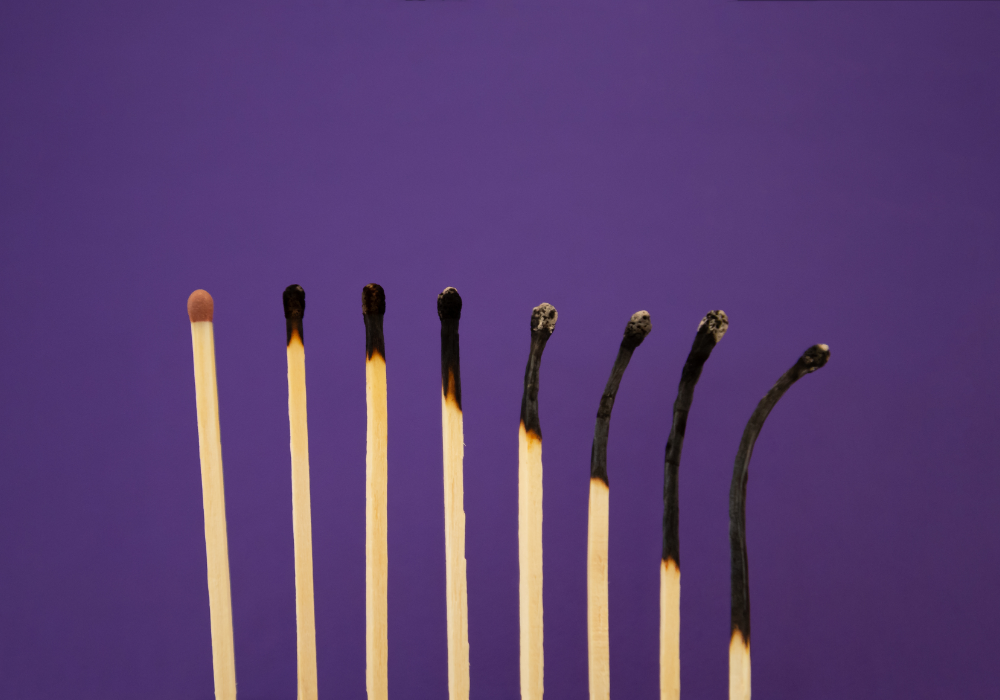
When you feel drained, your first reaction isn’t concern—it’s shame. You assume you’re not disciplined enough, strong enough, organized enough. Instead of resting, you double down. You reorganize your calendar, download a new app, or set even stricter routines. The idea that burnout might be a normal response to chronic overwork doesn’t register.
That mindset goes back to when pushing through was seen as strength. In school, being tired just meant you were working hard. You learned to ignore your limits and reward yourself for that detachment. Now your body sends up distress flares and you try to silence them with more caffeine and better time management. The hustle convinced you that needing rest is weakness. So you work harder to prove you’re okay—even when you’re not.
7. You romanticize being “booked and busy” even when it’s killing you.

There’s a strange pride in showing off how packed your schedule is. You tell people how tired you are like it’s a badge of honor. Back-to-back meetings, late nights, no days off—you present it like proof that you’re doing life right. But underneath the performance, you’re worn down.
You’ve built your self-worth on being needed, being useful, being the one who always shows up. This mindset got planted when being busy meant being valuable. In high school, your packed calendar made adults proud. It meant you were driven, focused, going places. That validation stuck. Now you’re addicted to the grind even though it’s slowly erasing you. Every free moment feels suspicious. You say yes to everything because you’re afraid of what silence might say. It’s not that you love the hustle—it’s that you don’t know who you are without it.
8. You turn every life problem into a personal growth project.

You don’t just feel your feelings—you analyze, optimize, and turn them into lessons. A breakup becomes a deep-dive into attachment styles. Burnout? Time to create a better morning routine. You treat emotional messiness like something to fix rather than something to sit with. Healing becomes another goal to check off a list.
That’s not a bad instinct on its own—it probably helped you cope when you were younger. Processing things intellectually gave you control when life felt unpredictable. But now, it’s become your default. You over-function when you should rest. You treat your inner world like a syllabus, something to master. Instead of letting yourself just be sad or scared, you try to work through it like it’s homework. The hustle isn’t just in your calendar—it’s in how you deal with pain.
9. You downplay how hard things are because you’re used to struggle.

When things get tough, your first thought isn’t to ask for help—it’s to figure it out quietly. You tell yourself it’s not that bad, that other people have it worse, that you’ve handled more before. You’ve internalized the idea that you can take it, so you do. Again and again.
This resilience isn’t fake—you really have pushed through a lot. But somewhere along the line, you forgot that you don’t have to. Struggle became the norm, so now peace feels unfamiliar. You don’t want to seem dramatic, so you shrink your needs.
You might laugh about being overwhelmed instead of actually doing anything about it. You’ve learned how to survive silently, but not how to soften. Not how to say, “I’m tired and I need someone else to carry this for a while.”
10. You keep thinking balance is just one habit away.

You’ve downloaded every productivity app, read all the self-help blogs, and told yourself that this time you’ll figure it out. If you just find the right planner, the perfect bedtime, the ideal morning routine, you’ll finally feel like you have it together. But the goalposts keep moving, and the chaos never fully settles. This belief started when you were younger and convinced yourself that being organized enough could solve everything. If you just tried harder, planned better, stayed more focused, things would click.
Now you’re caught in that same loop—burn out, reset, try again, burn out again. You treat balance like a puzzle instead of a boundary. But the truth is, no system will save you if you never give yourself permission to rest. You don’t need better time management. You need less to manage.
11. You only feel relaxed when you’re completely unreachable.

The only time you really feel calm is when your phone’s off, your calendar’s empty, and no one knows where you are. Maybe it’s a solo road trip, a dead zone in the woods, or just a full day of going completely dark.
It’s the only way you can stop responding to the constant tug of “just one more thing.” This kind of escape isn’t about drama—it’s about survival. You’ve trained yourself to be on call all the time, so true rest feels impossible unless it’s total disconnection. Partial rest doesn’t cut it. If people can still reach you, they will. And you’ll say yes. You always do. So your nervous system only unclenches when you’re off the grid. Which says a lot about how deeply the hustle rewired you—and how badly your brain still needs to recover from it.