
Carl Sagan foresaw many of today’s biggest threats to Earth long before they unfolded.
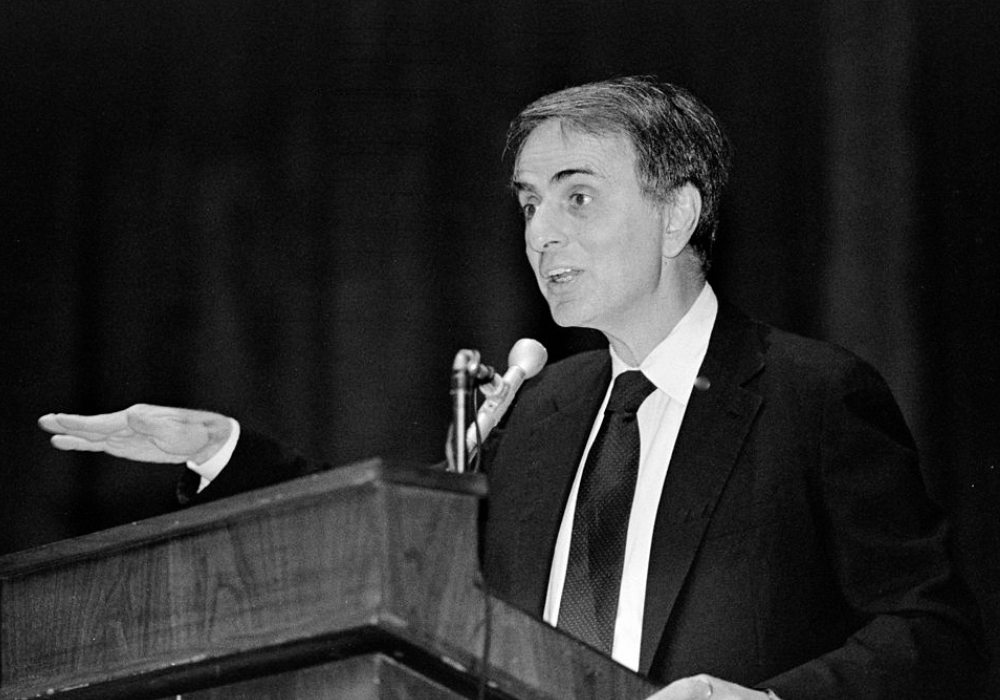
Carl Sagan, the celebrated astronomer and science communicator, often spoke about humanity’s place in the cosmos and the fragility of our planet. Before his death in 1996, he warned about threats like climate change, nuclear war, and environmental destruction, urging people to see Earth as a rare and precious home. Many of his reflections now seem remarkably prophetic, echoing today as the world grapples with challenges he anticipated decades ago. His words remain a powerful reminder of both peril and possibility.
1. “The Earth is a very small stage in a vast cosmic arena.” (Pale Blue Dot, 1994)

In reflecting on the iconic photograph taken by Voyager 1, Sagan urged people to recognize Earth’s fragility. He wanted humanity to see that our conflicts, borders, and struggles play out on a tiny speck suspended in the void of space.
This cosmic perspective was more than poetic—it was a moral call. At a time when global warming and environmental decline accelerate, his words remind us that Earth is our only stage, and we must protect it together.
2. “Our planet is a lonely speck in the great enveloping cosmic dark.” (Pale Blue Dot, 1994)
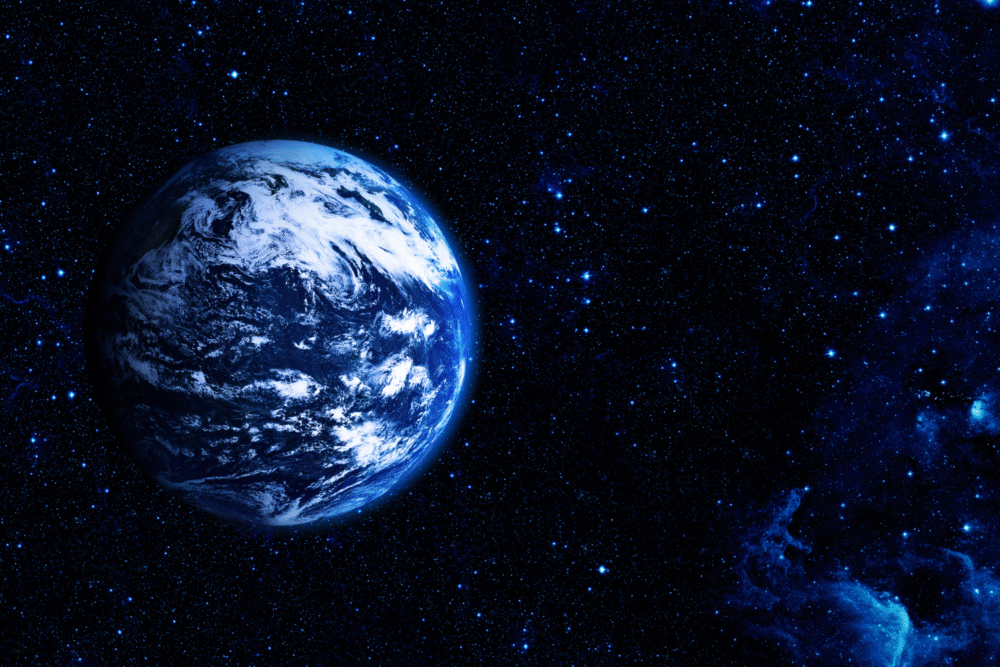
Sagan stressed that, so far, Earth is the only known home for life. That isolation makes it all the more vital to care for the ecosystems and climate that sustain us.
Today, as heatwaves, floods, and wildfires grow worse, this warning feels even more relevant. His point wasn’t just about space—it was about responsibility. We cannot afford to gamble with the one planet that shelters us in an otherwise hostile universe.
3. “We are a way for the cosmos to know itself.” (Cosmos, 1980)

For Sagan, the existence of human consciousness was one of the greatest cosmic miracles. Through science and curiosity, the universe had become aware of itself through us.
This vision comes with profound responsibility. If our species fails to preserve Earth’s climate and biodiversity, that self-awareness could vanish. His words encourage us not only to marvel at our place in the cosmos but also to guard it fiercely.
4. “Extraordinary claims require extraordinary evidence.” (Cosmos, 1980)

Sagan’s most famous principle has been applied everywhere from UFO debates to medical claims. But it also applies to modern issues like climate denial.
The claim that burning fossil fuels has no impact on the planet is extraordinary—and lacks credible evidence. Instead, overwhelming data shows the opposite. Sagan’s demand for rigor remains one of the best defenses against misinformation and dangerous wishful thinking.
5. “We’ve arranged a civilization in which most crucial elements profoundly depend on science and technology.” (The Demon-Haunted World, 1995)

Sagan noted that we rely on science for medicine, energy, and communication, yet most people don’t understand how it works. He feared this gap would leave societies vulnerable.
That prediction has aged uncomfortably well. From climate change to public health crises, decisions are too often made without evidence. His concern about scientific illiteracy has become a defining challenge of the 21st century.
6. “Our planet is precious.” (Cosmos, 1980)
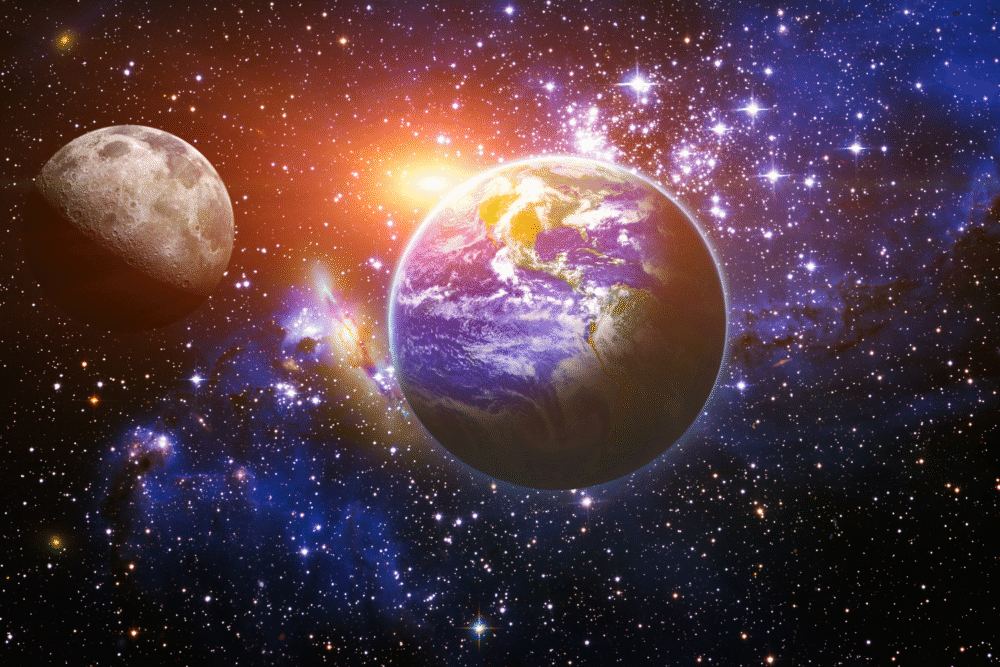
Simple yet powerful, Sagan often repeated this phrase while describing Earth’s beauty and uniqueness. He wanted viewers of Cosmos to feel awe, but also urgency.
In a time of accelerating environmental destruction, his reminder that Earth is irreplaceable cuts through noise. These three words contain the essence of sustainability: there is no backup planet, and treating this one as disposable will cost us dearly.
7. “There is no hint that help will come from elsewhere to save us from ourselves.” (Pale Blue Dot, 1994)

Sagan warned against expecting rescue from gods, aliens, or technology. Earth’s fate depends on human choices, not miracles.
This truth feels sharper now as climate solutions are debated. Geoengineering or futuristic inventions may help, but they cannot replace responsibility. Sagan’s words remind us that survival will come from collective will, not outside saviors.
8. “If we continue on our present course, it will be our undoing.” (Billions and Billions, 1997)
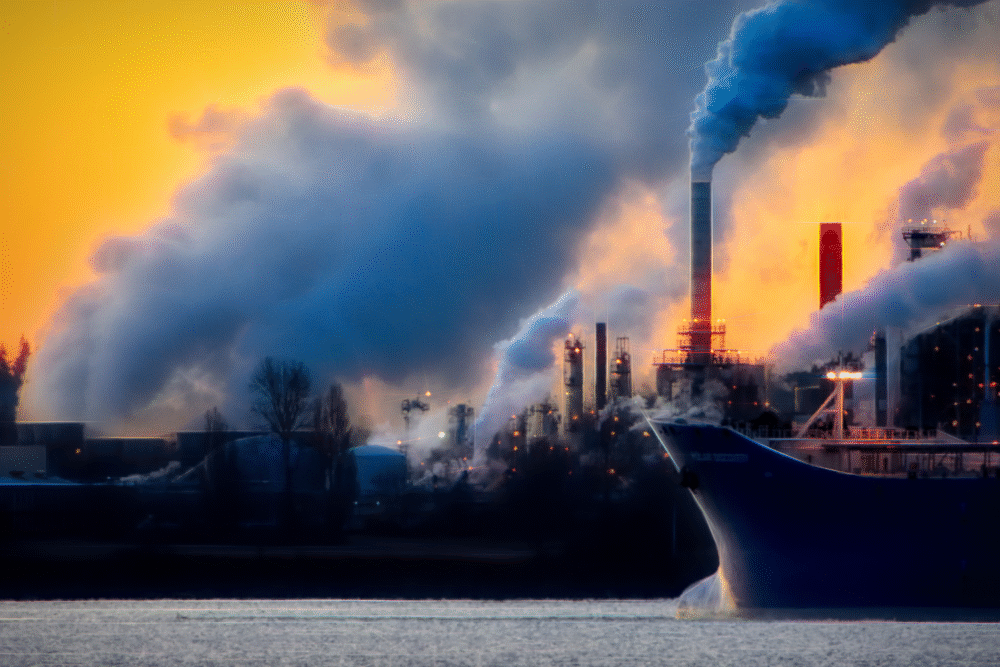
In his final book, published posthumously, Sagan was blunt about humanity’s trajectory. Environmental degradation, nuclear weapons, and climate change were threats he believed could unravel civilization.
The phrase feels haunting now, as his predictions unfold. It’s not too late to change course, but his warning stands: continuing “business as usual” guarantees collapse. He left us both a diagnosis and a call to act.
9. “We’ve crossed thresholds that should never have been crossed.” (Billions and Billions, 1997)

Sagan lamented that humanity had already damaged the planet in ways that would be difficult to reverse. From nuclear testing to rising greenhouse gases, he saw lines we should never have crossed.
Today’s world bears out this fear. Arctic ice, coral reefs, and species are disappearing faster than predicted. His words underline the urgency of avoiding further irreversible damage before more tipping points are passed.
10. “We are capable of greatness.” (Cosmos, 1980)

Even with his dire warnings, Sagan never lost faith in humanity’s potential. He saw science, compassion, and imagination as tools that could carry us beyond crisis.
This balance of realism and optimism is what made him unique. He believed we could destroy ourselves, but also that we could become explorers, peacemakers, and caretakers of Earth. His words remind us that the choice is still ours.