
Recent discoveries prove our ancestors built and innovated in ways that still amaze experts today.

Advanced ancient civilizations reveal a fascinating story of human progress long before recorded history. These societies developed complex social structures, crafted sophisticated tools, and expressed rich artistic traditions. Their achievements in agriculture, trade, architecture, and symbolic communication highlight a diverse and adaptive existence. Understanding these key aspects offers insight into early technological advances and cultural depth, challenging common misconceptions about prehistoric life.
1. They developed complex social structures and organized communities.

Complex social structures emerged as prehistoric societies evolved beyond small familial groups into organized communities. Villages transformed into complex networks with shared goals, reflecting common cultural practices and norms. Community roles became more defined, and leadership structures often emerged, showcasing an early form of governance.
Ancient societal organization relied heavily on cooperation and shared resources, allowing groups to thrive in varied environments. These early communities laid the groundwork for future civilizations by managing resources and distributing tasks. An example is the development of trade routes that linked diverse groups, reflecting a sophisticated social order.
2. They created sophisticated tools and technologies from natural materials.

Using natural materials, prehistoric civilizations crafted tools that aided survival and development. Stones, bones, and wood were transformed into hand axes, spears, and other implements, demonstrating ingenuity and adaptation. Early technology wasn’t primitive—it was highly effective for its time.
Though simple by modern standards, these tools revolutionized daily life by improving food gathering and protection. The gradual refinement of techniques allowed societies to expand their capabilities. For instance, flint-knapping sharpened the cutting edge of tools, making tasks more efficient and paving the way for further advancements.
3. Early forms of agriculture supported growing populations and permanent settlements.

The introduction of agriculture transformed human societies by supporting larger populations and permanent settlements. Early farmers domesticated plants and animals, creating stable food sources. As cultivation methods improved, communities grew, and settlements expanded in scope and influence.
With agriculture’s rise, people had more time to develop cultural practices and technologies beyond subsistence. Farming fostered innovations and collaborations, such as irrigation systems that improved yields. These advancements laid the groundwork for complex societies where agriculture became central to economic and social life.
4. These societies often had distinct artistic traditions expressed through carvings and pottery.
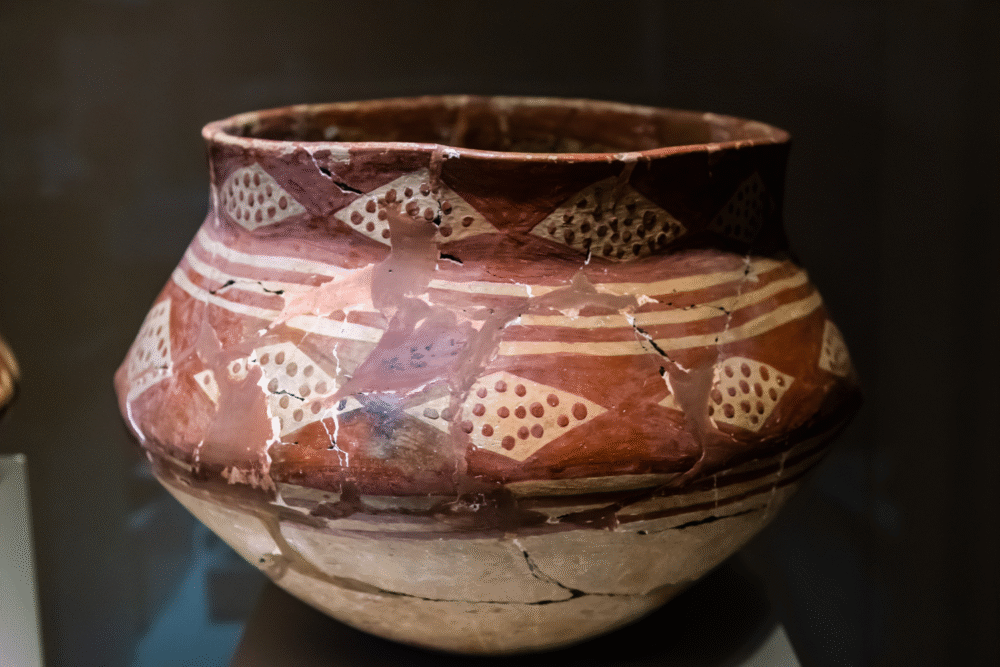
Artistic expression flourished in prehistoric societies with distinct styles manifesting through carvings, pottery, and cave paintings. These forms reveal social stories, beliefs, and daily life. Artisans often incorporated natural motifs and symbols, showing intricate knowledge of their environment.
Cultural expressions vary widely among early communities, with some groups using art as a ritualistic or ceremonial practice. Notable discoveries include vibrant cave art, such as at Lascaux, reflecting a deep connection to nature and a sophisticated understanding of imagery and representation.
5. Trade networks connected distant groups facilitating cultural and material exchanges.

Vast trade networks linked distant prehistoric societies, facilitating cultural and material exchanges across regions. Stone, shells, and metals traveled vast distances, revealing an interconnected world even in ancient times. These exchanges enriched societies, spreading innovations and ideas.
The complexity of early trade required organization and negotiation skills, contributing to social development. Through these networks, diverse groups shared tools, art, and technologies, leading to mutual advancement. Archaeological findings, like traded obsidian tools, highlight how integral these networks were to civilization growth.
6. Spiritual beliefs and ritual practices played a significant role in daily life.

Spiritual beliefs and rituals guided daily activities in prehistoric communities, offering explanations for natural phenomena and life’s mysteries. Rituals and ceremonies often centered around natural elements and cycles, integrating art, storytelling, and dance to communicate ancestral knowledge.
Such practices forged a strong cultural identity and community cohesion, as seen in burial sites or sacred artifacts like figurines. Spiritual activities often reinforced social order, creating a shared sense of purpose. The presence of ceremonial structures indicates the value placed on spiritual life and communal gatherings.
7. Architecture included impressive constructions like megaliths and early dwellings.

Megaliths and early dwellings stand as testaments to prehistoric architectural ingenuity. Stone circles, tombs, and habitation sites showcase sophisticated planning and construction techniques. These structures often served religious or communal purposes, reflecting the builders’ deep understanding of their surroundings.
Stonehenge and similar sites reveal complex engineering skills, utilizing precision and coordination in construction projects. Such architecture required resource management and labor organization, indicative of advanced societal capabilities. These constructions also served as cultural hubs, strengthening social bonds through shared efforts and communal activities.
8. Skilled craftsmanship in textiles, metalwork, or stonework demonstrated advanced techniques.
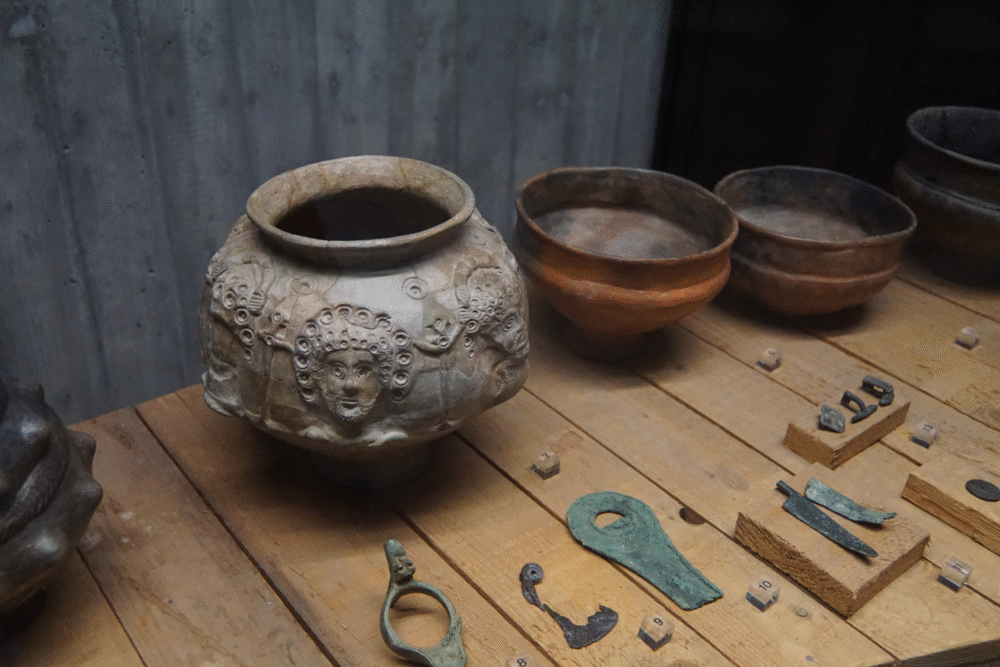
In prehistoric times, skilled craftsmanship in textiles, metalwork, and stonework demonstrated artisans’ advanced techniques. Each craft required understanding materials’ unique properties and implementing specialized methods. Textiles were woven with fibers from plants or animals, creating durable garments and goods.
The development of metallurgy, like copper smelting, marked significant technological and cultural progress. These skills boosted trade and social standing, enhancing communities’ economic power and influence. Artifacts, like intricately carved stone axes, stand as both utilitarian and artistic achievements, highlighting the profound impact of craftsmanship.
9. Written symbols or proto-writing appeared to record information or communicate ideas.

Symbolic communication emerged in prehistoric societies with proto-writing and symbols conveying information or ideas. This early communication system aided in keeping records, passing down knowledge, or marking ownership. Symbols often adorned pottery, cave walls, or artifacts, reflecting cultural contexts.
Though distinct from full writing systems, these symbols show early cognitive and cultural advancements. Through these markings, societies documented significant events and ideas, enhancing communication and understanding. Early pictographs, such as those found in Mesopotamia, demonstrate the importance of visual communication in maintaining societal cohesion.
10. Environmental adaptation was key for survival in diverse ancient landscapes.

Adaptation to diverse environments was crucial for prehistoric communities’ survival and prosperity. Flexible strategies were embraced, allowing societies to thrive in varying climates and terrains. Resourcefulness manifested in diverse forms, from seasonal migration to strategic hunting and gathering practices.
While some communities thrived in lush valleys, others adapted to harsher conditions, demonstrating impressive resilience and ingenuity. These adaptations influenced cultural and social development, shaping distinct groups with unique lifestyles. Archaeological evidence shows how environmental understanding guided settlement choices and resource management, fostering long-term stability and growth.