
Knowing how to react can reduce risk and help keep both people and wildlife safe.
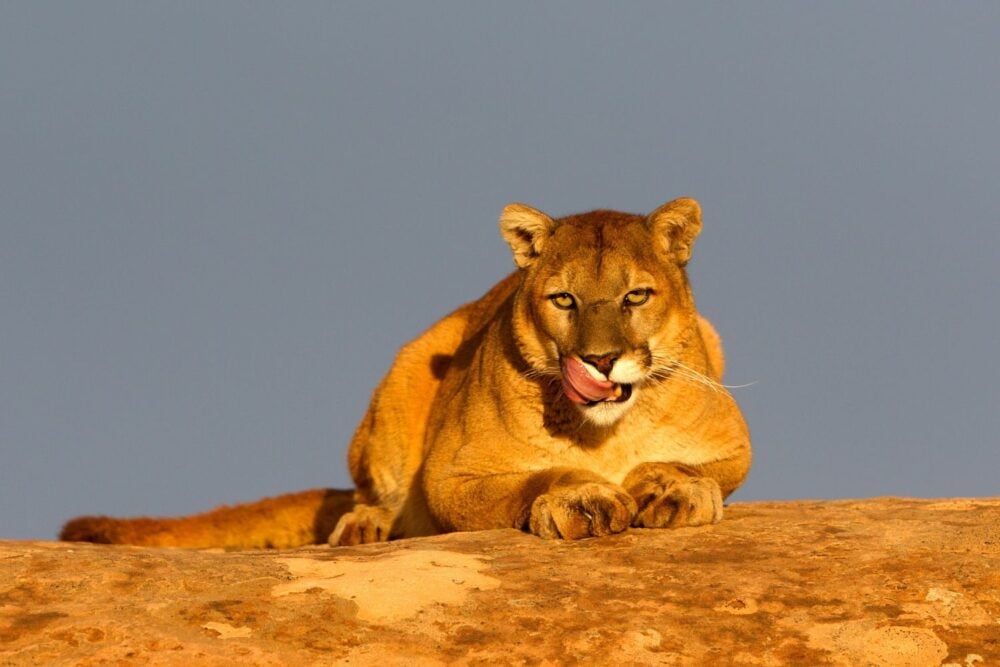
Mountain lion encounters are rare, but when they happen, they’re often sudden and frightening. These animals are quiet, powerful, and designed to avoid people whenever possible.
When an encounter does occur, panic and instinct can make the situation worse. Wildlife experts say survival often depends on staying calm, reading the animal’s behavior, and responding in a way that discourages an attack.
Understanding what to do and what not to do can make a critical difference. The goal isn’t to fight a mountain lion, but to convince it you are not prey and not worth the risk.
1. First, stop and take in the situation
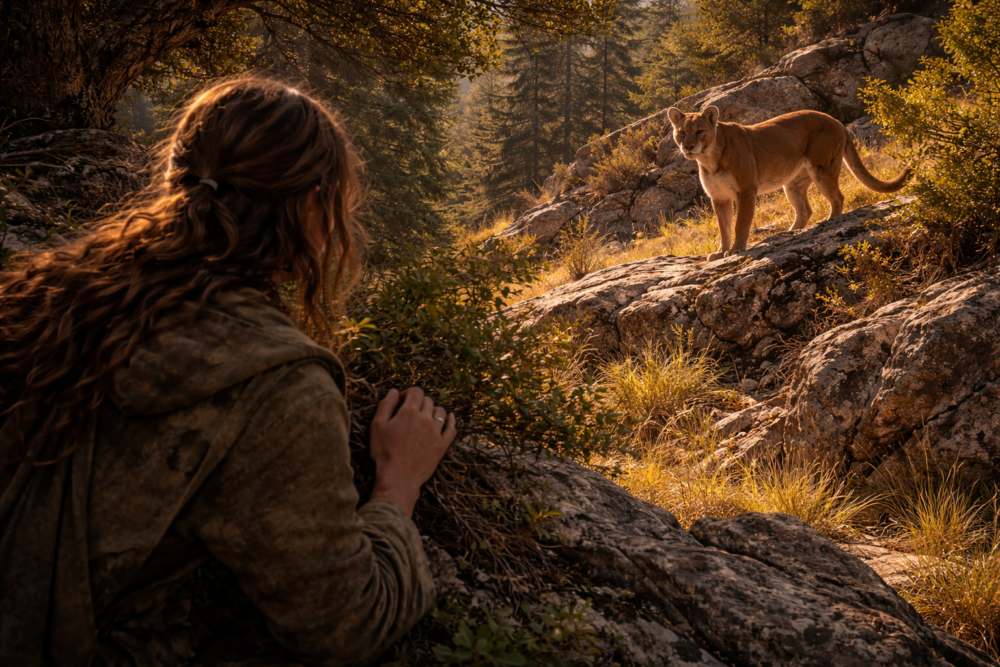
If you realize a mountain lion is nearby, stop moving and look around carefully. Sudden movement can trigger a chase response, especially if the animal is already watching you.
Take a moment to assess distance, terrain, and whether the lion appears aware of you. Experts say staying grounded and alert helps prevent instinctive reactions that escalate the encounter before you’ve had time to respond deliberately.
2. Make yourself look larger immediately

Mountain lions are ambush predators that assess prey size and vulnerability. Standing tall, raising your arms, opening a jacket, or holding a backpack above your head can make you appear larger and more intimidating.
Experts recommend doing this slowly and deliberately. The goal is to change how the animal perceives you, signaling that you are not an easy target and not behaving like typical prey.
3. Maintain eye contact without staring aggressively
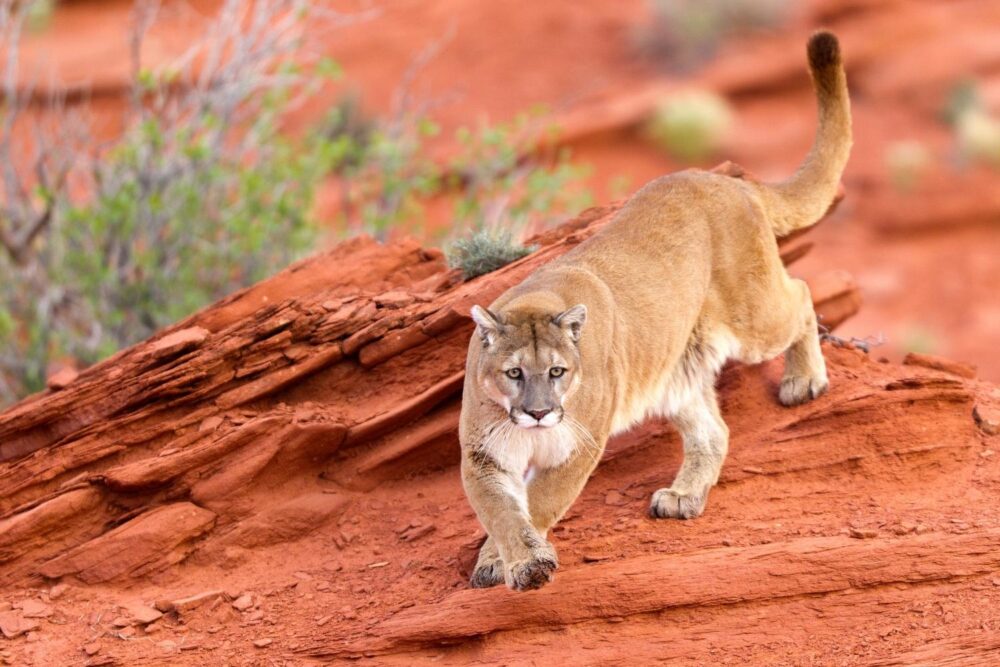
Looking at the mountain lion lets it know you are aware of its presence. Turning your back or looking down can signal vulnerability, which increases risk.
At the same time, experts caution against aggressive staring or sudden head movements. Keep your gaze steady, your posture upright, and your movements controlled to communicate confidence without provoking the animal.
4. Do not run, no matter how strong the urge

Running can trigger a mountain lion’s natural chase instinct. Even people in good physical shape cannot outrun a mountain lion over short distances.
Experts stress that staying in place or backing away slowly is far safer. Running transforms you into moving prey, while standing your ground changes the dynamic of the encounter.
5. Back away slowly if the lion allows space
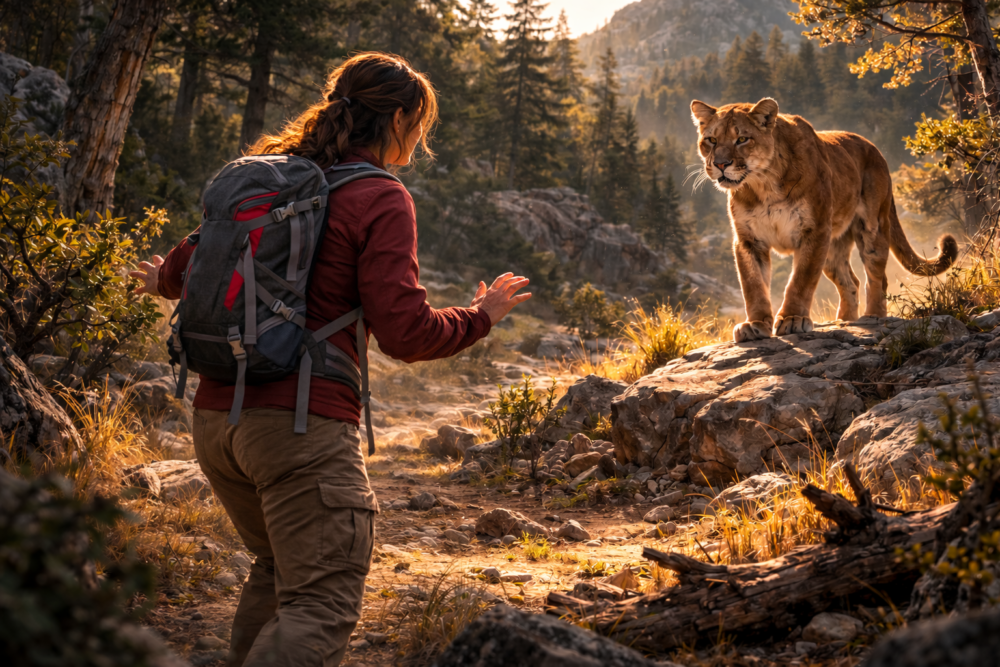
If the mountain lion does not approach, begin backing away slowly while keeping it in view. Create distance without turning your back.
This shows the animal you are aware and retreating, but not panicked. Experts say many encounters end at this stage when the lion decides you are not worth pursuing.
6. Speak firmly and confidently
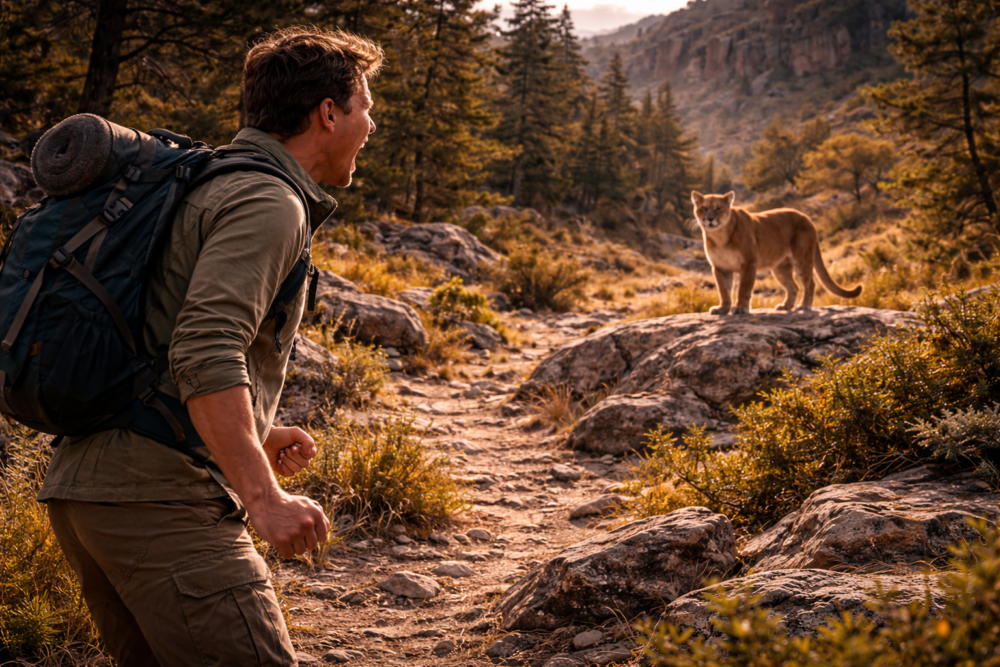
Using a loud, steady voice can help establish dominance. Shouting, speaking firmly, or making assertive sounds can discourage the lion from approaching.
Avoid high-pitched screaming, which may signal fear. Experts recommend short, confident phrases delivered calmly to reinforce that you are alert, strong, and not an easy target.
7. Pick up children or pets without bending down

If you are with children or small pets, pick them up immediately. Bending down can make you appear smaller and more vulnerable, which is risky.
Experts advise lifting children while staying upright and maintaining eye contact with the lion. Keeping the group together and appearing as one large figure can reduce the chance of an attack.
8. If the lion approaches, stand your ground
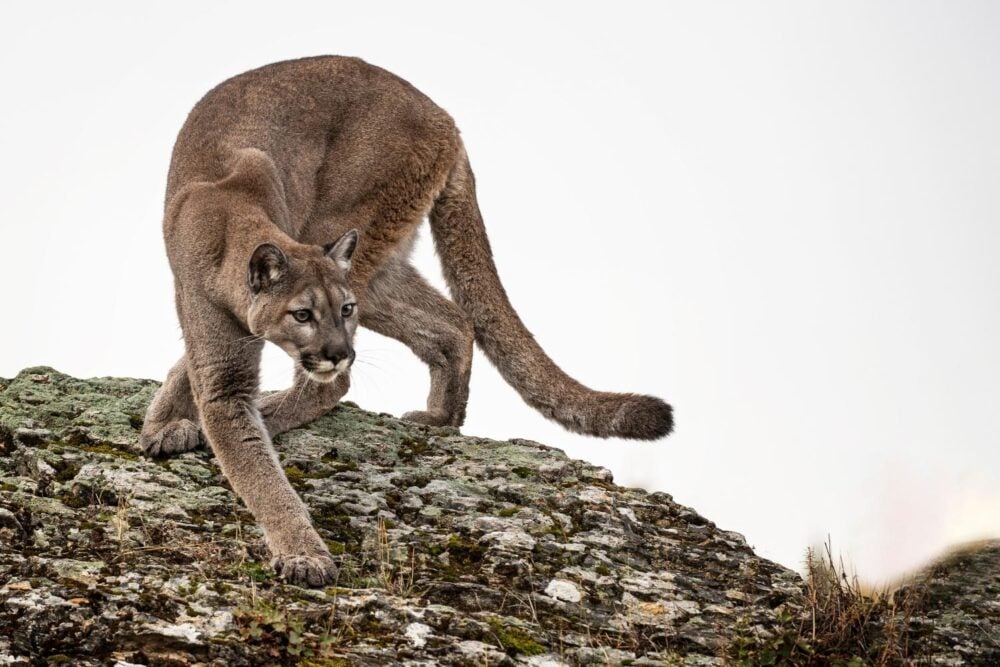
A mountain lion that continues to move closer is testing you. At this point, experts say it’s important not to retreat further or show fear.
Hold your position, stay tall, and continue using your voice and posture to assert yourself. Many lions break off when they encounter resistance rather than submission.
9. Use objects if you need to defend yourself

If the lion behaves aggressively or attacks, use any available object—sticks, rocks, backpacks—to defend yourself. Aim to protect your head and neck.
Experts emphasize that fighting back is critical in a true attack. People who resist aggressively are more likely to stop the encounter than those who curl up or freeze.
10. Understand that attacks are extremely rare

While these encounters are frightening, experts stress that mountain lion attacks on humans are very uncommon. Most lions avoid people entirely.
Knowing this can help you stay calmer if you encounter one. Calm, confident behavior aligns with how experts say most encounters end safely, without injury to people or animals.
11. Preparation matters before you ever see one

The best defense starts before an encounter. Hiking in groups, making noise in dense vegetation, keeping pets leashed, and being alert at dawn and dusk all reduce risk.
Experts say awareness is key. When people understand how mountain lions behave and how to respond, rare encounters are far more likely to end with everyone walking away safely.