
A newly mapped moat in Jerusalem reshapes what we know about biblical-era defenses.
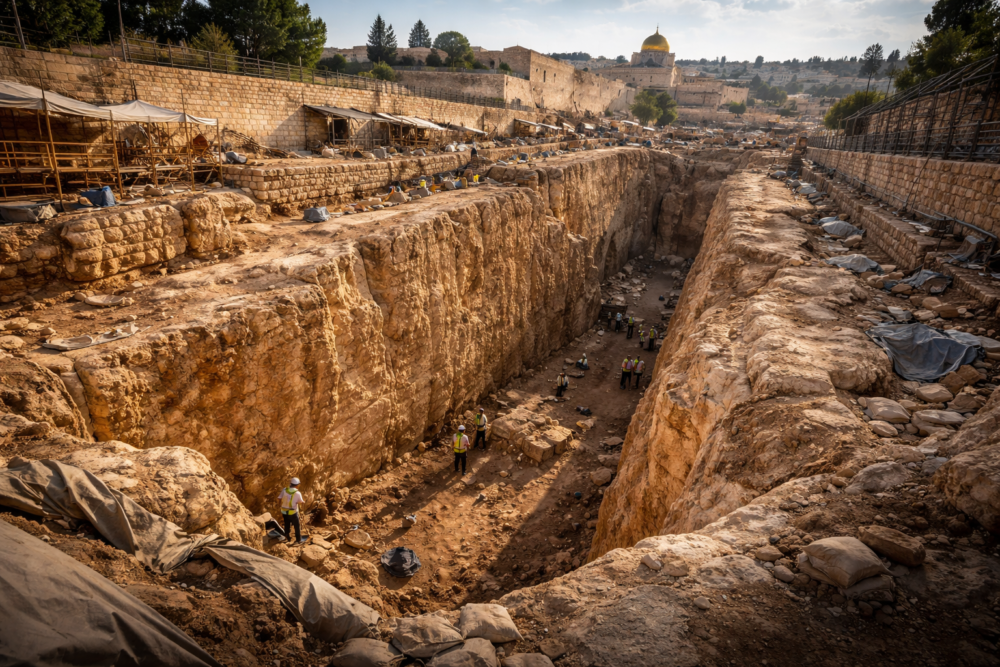
A massive rock-cut trench in Jerusalem has solved a mystery that stumped archaeologists for about 150 years.
Excavators working in the City of David uncovered a fortification moat at least 9 meters deep and about 30 meters wide, separating the ancient “upper city” from the neighborhoods to the south. It was carved straight into bedrock.
Researchers say the moat was in use nearly 3,000 years ago, helping protect the royal acropolis and the area around the Temple Mount. They add that its location lines up with biblical descriptions of Jerusalem’s layout, including a passage in 1 Kings that mentions building the Millo.
1. A “missing” fortification finally shows up

For generations, researchers knew Jerusalem’s ancient northern defenses had to exist somewhere, but the pieces never connected. Dig reports hinted at a huge cut in the rock, yet its full route stayed frustratingly unclear for decades.
Recent digging at the Givati Parking Lot area in the City of David exposed a wide, rock-hewn moat that lines up with those older clues. Once the new section was matched to earlier finds, the “gap” in the map suddenly made sense for the first time.
2. This wasn’t a little ditch

The newly identified moat is enormous: researchers describe it as at least about 9 meters deep and roughly 30 meters wide. It isn’t a natural streambed. It was carved intentionally into solid bedrock by human hands, likely over years.
That scale matters because it implies serious planning, labor, and authority. You don’t cut a trench like that on a whim. The moat would have been an unmistakable obstacle, especially for anyone approaching the most important part of the ancient city on foot.
3. It split the city into two zones

Archaeologists say the moat separated Jerusalem’s ruling “upper city” from the residential areas to the south. In other words, it drew a hard line between the power center and everyday life in one dramatic stroke.
On the north side were the key institutions—areas associated with royal administration and the sacred precinct near the Temple Mount. On the south side were homes and streets. The moat helped control movement, visibility, and access through the city’s most sensitive front door during tense times.
4. The site was hiding under a modern parking lot

One reason the moat stayed elusive is also the most relatable: modern Jerusalem sits on top of ancient Jerusalem. The section that clarified the moat’s route was uncovered in excavations beneath and around the Givati Parking Lot in the Jerusalem Walls National Park.
When archaeologists dig there, they’re working through layers from many time periods. That’s slow, careful work. But it also means a discovery like this can connect dots across decades of older excavations and suddenly change what the whole landscape looks like.
5. The find revived a clue from Kathleen Kenyon

After the moat section was exposed, the team went back to field notes from British archaeologist Kathleen Kenyon, who excavated in the City of David in the 1960s. She had noticed rock sloping the “wrong” way and interpreted it as a natural valley.
With the new trench in view, researchers now think Kenyon may have been staring at the same man-made feature, just in a different spot. Linking her observations with the recent excavation helps explain why the moat was so hard to recognize in fragments.
6. The trench is tied to a long debate about “Millo”
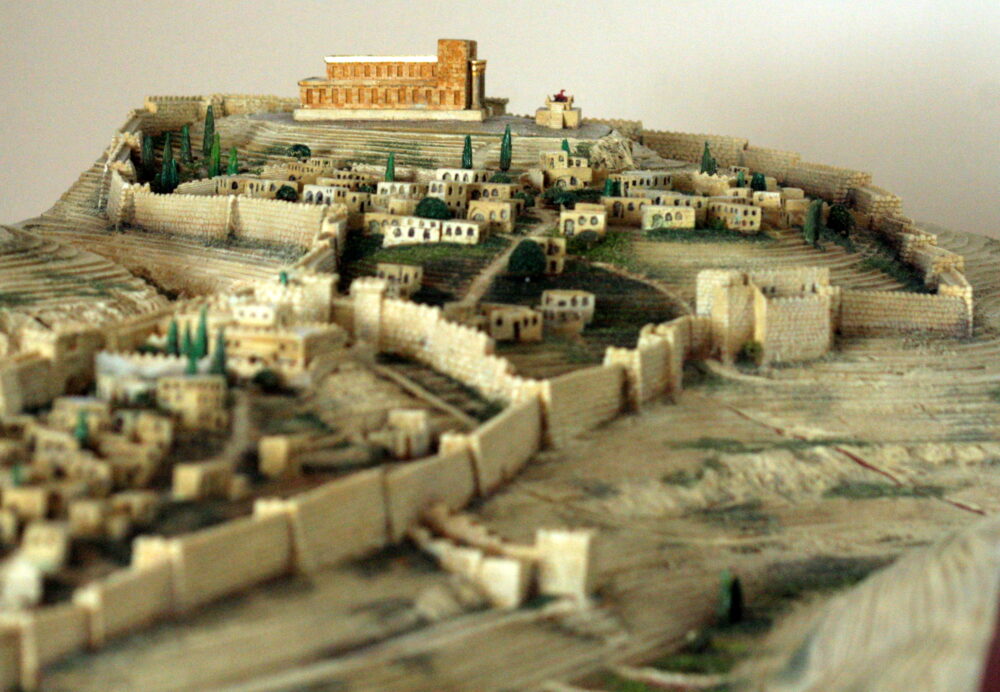
The Bible mentions a construction called the Millo in Jerusalem, including a passage in 1 Kings 11:27 that describes building work associated with fortifying the City of David. For years, scholars have debated what, exactly, “Millo” refers to.
Researchers involved in the excavation say the newly mapped moat fits the kind of major topographic intervention such texts could be describing. It doesn’t “prove” the passage, but it offers a concrete feature that matches the idea of large-scale fortification and urban reshaping.
7. Dating the moat is tricky, so scientists stay cautious

Rock-cut features are hard to date directly because the “hole” itself doesn’t contain an obvious timestamp. Instead, archaeologists look for clues in the fills, the layers that accumulate, and the surrounding structures.
The team says evidence points to the moat being used during the centuries when Jerusalem was the capital of the Kingdom of Judah, roughly around 3,000 years ago. That’s the key word: used. The trench could have been cut earlier, reused later, and adapted as the city’s needs changed.
8. Why build something this extreme?

A moat this size wasn’t only about defense. Researchers suggest it also sent a message. If you entered the city and saw a massive, carved trench guarding the most important precinct, you’d understand who had power and resources.
There’s also a practical angle: the City of David’s northern side was a vulnerable approach compared with steep slopes elsewhere. A rock-hewn trench would slow attackers, funnel movement, and buy time. It’s a reminder that ancient engineering often blended symbolism with strategy.
9. These deep cuts change how we picture ancient Jerusalem

When you imagine biblical-era Jerusalem, it’s easy to think of walls and gates sitting on top of a hill. The moat adds another layer: the landscape itself was modified to create separation inside the city.
That matters for historians mapping where people lived, where leaders ruled, and how crowds moved during major events. A wide trench can redirect streets, shrink or expand neighborhoods, and reshape the social map. In short, it’s not just a structure. It’s a city-planning decision carved into stone.
10. It’s also a reminder that “known” sites still surprise us

The City of David has been excavated for more than a century, and parts of it have been studied intensely. Yet this discovery shows that even famous sites can hold major features in plain sight, especially when earlier digs only exposed short segments.
As methods improve and teams revisit old reports, new patterns emerge. In this case, re-reading a 1960s observation and matching it with a modern excavation helped unlock the bigger picture. Sometimes archaeology advances by digging forward—and by looking back.
11. The next step is testing the story the moat tells

Now that a substantial stretch of the moat’s route has been mapped, researchers can ask sharper questions: Where did it begin and end? How was it crossed? Which neighborhoods did it separate, and when?
Future work can also focus on the layers around the trench to tighten the timeline and understand how the moat functioned day to day. For readers, the takeaway is simple: a single, giant cut in the rock can rewrite how we imagine a city we thought we already knew.